We millennials remember using the internet in the 2000s and early 2010s. It was a fun space to talk to real friends, make new virtual ones, and learn about all sorts of things. Gradually, though, the internet became a dumpster fire of political trolls, bots, and hate speech. Add AI and deepfakes to the mix, and being online has become an anxiety-inducing experience. The internet is almost unrecognizable from what it was a decade ago. We speculate about the reasons and blame whichever factions we already dislike in real life to justify our experiences.
On October 12, 2026, something strange happened. The trolls and bots in my social media feeds went quiet. I could finally see the accounts I follow and actually want to read, instead of an endless stream of AI slop and ragebait. There were still hateful comments, but they seemed to make up barely one per cent of what I had seen the day before. It felt like stepping into a social media time machine and returning to 2011.
Why did this happen suddenly? Let me tell you.
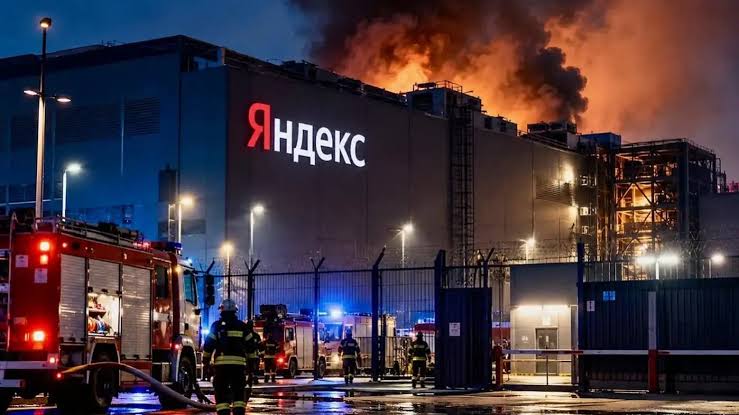
Ukraine used its Fire Point drones to attack three Russian Yandex data centers. The first strike, on October 8, hit the center in Sasovo, in the Ryazan region, causing a fire and forcing operations to shut down. The second, on October 9, targeted a center in Kaluga, southwest of Moscow, damaging parts of its infrastructure. The third, on October 11, struck a center in the Vladimir region, east of Moscow, reportedly suspending operations at the site. The attacks severely disrupted Yandex services and other Russian websites and online services that relied on the infrastructure.
This was already a big milestone in the Ukrainian war effort. But something else caught people’s attention. The day after the third strike, American far-right accounts on X (Twitter) and Instagram appeared unusually quiet. Liberal accounts reported a fraction of their usual hate comments, and people began noticing a change in their feed. Reports of similar changes emerged from Germany, the UK, Poland, and Canada, where users saw much less far-right content and hate speech in their feeds. German users pointed to the far-right AfD, while British, Polish, and Canadian discussions raised questions about a decrease in anti-immigrant rhetoric, hostility towards Ukrainian aid, and separatist narratives.
There was speculation online that the Russian data infrastructure hit the day before had been supporting networks that manufactured and amplified political division abroad. Three data centers were reportedly taken offline, and people in different countries began describing a drastically civil online experience. Interesting, isn’t it?
The icing on the cake came later that day, when Ukrainian President Volodymyr Zelenskyy addressed the Warsaw Security Forum virtually and spoke about the relationship between the attacks on Russian data infrastructure and the possibility of making the internet a more breathable, civil space again, while promising that these attacks will continue.
There have been several theories about the motivations behind the strikes. Some Americans speculated that the timing was significant ahead of the US midterm elections in early November. Others suggested the attacks were retaliation for a reported US–Russia diesel deal a week earlier. But there is another context familiar to those who have followed Ukraine’s war effort closely.
Since February 2022, Russia has relentlessly attacked Ukraine’s civilian infrastructure: power plants, water supplies, electrical hubs, railway stations, bridges, residential buildings, hospitals, and schools. Ukrainian data centers were specifically targeted by Russian missiles in September and October 2026, with the motivation to isolate Ukrainians from the rest of the world, to silence them cruelly into submission.
For years, Ukraine lacked the means to retaliate at the scale it wanted without substantial Western assistance. That began to change in late 2025, as a domestic drone revolution expanded its ability to strike back through technological innovation and greater independence from direct Western weapons aid. Fire Point drones are part of that broader development. Ukraine has used its growing long-range strike capabilities to disrupt Russian civilian life and economic activity by targeting oil refineries, military airports, and weapons storage facilities. Despite being one of the world’s largest crude oil exporters, Russia still depends on refining that oil into usable fuels for domestic consumption and the war effort.
Ukraine and the rest of Eastern Europe have been painfully aware of Russian bot farms and cyberattacks since 2014, when Russia illegally annexed Crimea and intensified its information warfare against Western democracies. Much of Western Europe and North America, however, was slower to recognize the scale of the threat. Cheap energy, arrogant political complacency, and Russian money flowing into influential circles all contributed to that failure.
Warnings about Russian disinformation have grown louder since the full-scale invasion of Ukraine in 2022. The recent disruption would offer a striking illustration of just how vulnerable global democratic societies have become. Russia has invested heavily in misinformation and propaganda in the past 10-15 years, while audiences who do not recognize the motives behind these campaigns can end up consuming and spreading them uncritically. Almost 50% of online activity is bots, according to some claims.
The rise of far-right politics, alongside increasingly divisive narratives about minorities, climate change, and immigrants across the world over the past decade, cannot be understood in isolation from these information campaigns. Their precise influence varies by country and cannot be reduced to a single cause. Russian propaganda prides itself on using existing local, divisive issues and amplifying them to benefit itself in its illegal war. But the scale and sophistication of Russian information warfare deserve far more attention than they have received. So does the determination of Ukrainians, who continue to resist Russian aggression while watching their own allies become more sympathetic to the very political forces that threaten their support.
Online, people have been celebrating this welcome break from bots and hate speech, with some thanking Ukraine for what they see as an extraordinary service to the world. But we need to remember one thing: it is not Ukraine’s job to save us. Ukrainians have more than enough on their plate.
We need to learn from this experience, think critically about what we consume, and assign blame where it belongs, not where Russian bots tell us. We can donate to Ukraine (United24). We need to vote for governments committed to protecting the planet, strengthening democratic alliances, and resisting authoritarian influence. Because even if Russian data centers disappear, and Ukraine will make sure they will, we will still have other fronts to fight. We cannot outsource the defense of our democracies to Ukrainians, or to anyone else. We must take responsibility for saving our own beautiful countries.


Leave a Reply